The trusted source of income data
Lenders read source income directly from the payslips your platform generates, positioning your platform as the trusted source of the income data your customers' lenders require.
Your platform embeds an encrypted Verifiabl seal into each payslip at the point of generation. When a lender receives the payslip and reads the seal, the Verifiabl API decrypts it and returns the source income data without ever calling back into your environment. No PII is shared.
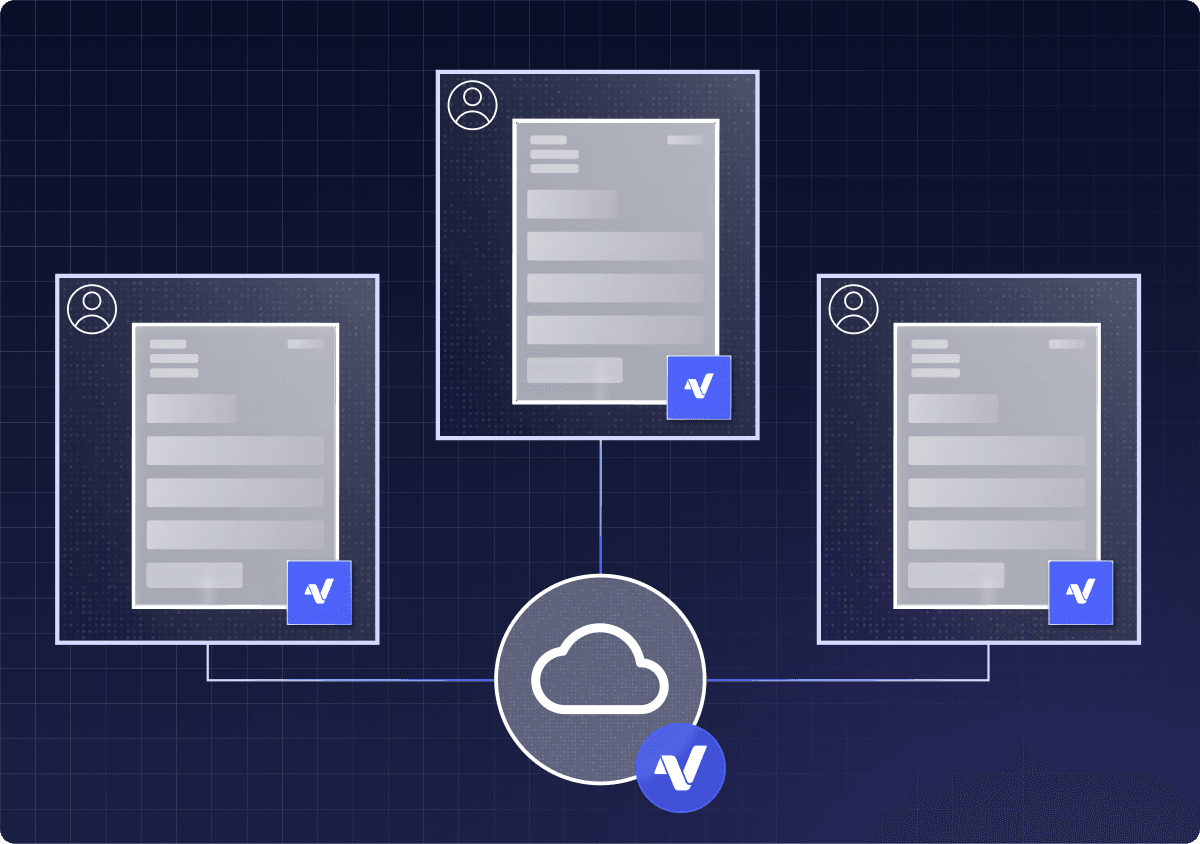
Your system integrates with Verifiabl to create an encrypted seal, and embeds it in the payslip. The employee sees the same payslip.
PII does not leave your environment as part of the integration. Source income data is sealed into the payslip under the employee's control.
When a lender or other accredited verifier receives the payslip and reads the seal, the Verifiabl API returns the source income data to them. Your platform is not part of the verification path, and ongoing engineering work does not scale with verification volume.
The trusted infrastructure layer connecting payroll supply with credit demand.
Lenders read source income directly from the payslips your platform generates, positioning your platform as the trusted source of the income data your customers' lenders require.
No PII leaves your platform as part of the integration. Keeping PII on the payslip can help expedite the Risk and Governance reviews that typically follow third-party data access.
Your platform integrates with Verifiabl at the point of payslip generation. You receive sandbox environments, implementation examples, and a dedicated integration engineer through onboarding.
Once integrated, the verification path runs between the lender and Verifiabl. Your platform stays out of the verification flow, and ongoing engineering work doesn't scale with verification volume.
Zero PII leaves your environment
Embedded at generation, verified on demand
Compatible with any payslip template
AU-resident infrastructure
Reach out to see how Verifiabl is preventing fraud and streamlining lending applications while protecting employee privacy.